
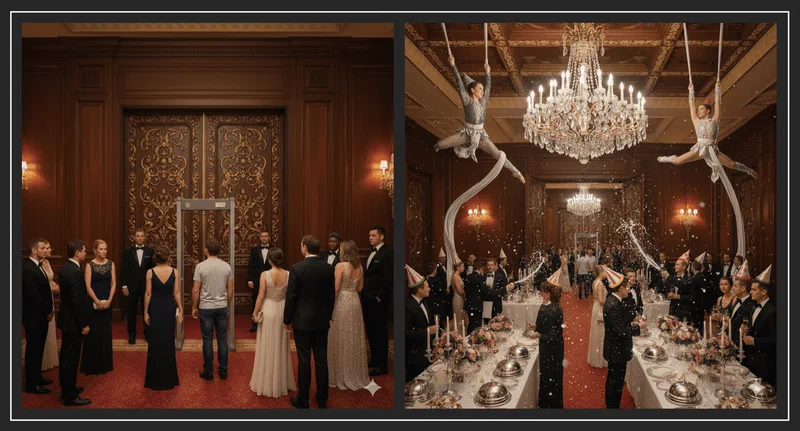
Imagine you’re standing in the grand foyer of a luxury hotel, staring at a pair of closed mahogany doors. Behind those doors is a gala-a complex, moving, breathing event. As an AppSec leader or developer, your job is to make sure that gala stays safe. But here’s the problem: most of your security tools are standing in the hallway with you. They’re guessing what’s happening inside based on the guest list or the noise coming through the door.
Who Should Read: AppSec Managers, DevSecOps Engineers, and Software Architects.
Highlights:
- The limitations of “outside-in” security
- The Ballroom Analogy for SAST, DAST, and IAST
- Why Runtime visibility is the only way to eliminate false positives.
To secure modern applications, you need to stop hovering in the hallway. Let’s break down the “Ballroom Analogy” of application security testing.
SAST: Checking the Grammar of the Invitation
Static Application Security Testing (SAST) is like proofreading the invitations and the event program before the party even starts.
- The View: You’re looking at the blueprints and the written instructions.
- The Focus: SAST checks the “grammar” of your code. It looks for typos, poorly written syntax, or “unsafe” words in the source code.
- The Flaw: Just because an invitation is grammatically perfect doesn’t mean the party won’t turn into a riot once the guests arrive. SAST can’t tell you how the code will actually behave when it’s powered on and interacting with real-world chaos.
DAST: Watching the Foyer Traffic
Dynamic Application Security Testing (DAST) is like standing outside those closed mahogany doors once the music starts playing.
- The View: You see who goes in and who comes out.
- The Focus: DAST pokes at the outside of the “room” (the running application). It sends a “guest” (a request) to the door and watches to see if the “bouncer” (the app) lets them in or if something breaks.
- The Flaw: You have no idea what that guest is doing once they disappear inside. Did they steal the silver? Did they unlock a back window? DAST is blind to the internal execution; it only knows if the front door stayed on its hinges.
The Reality Gap
Both SAST and DAST suffer from the same fundamental limitation: The “Inside” is a Black Box. * SAST sees the plan but not the action. DAST sees the input/output but not the process. This leads to “False Positive Fatigue” for developers and a massive “Visibility Gap” for security leaders. You end up chasing ghosts or, worse, missing a thief who walked through the front door with a valid ticket but malicious intent.
Waratek IAST: You’re Finally Inside the Room
Interactive Application Security Testing (IAST)-specifically Waratek’s flavor-is the equivalent of being the guest of honor inside the ballroom. With Waratek, you aren’t guessing based on the “grammar” of the code or the flow of the traffic. Because Waratek operates within the Runtime, the security engine is woven into the execution of the application itself. Being “Inside” Changes Everything:
- See the Execution, Not Just the Draft: Waratek sees exactly how the code executes in real-time. If a piece of code tries to perform an illegal move-like a SQL injection or an unauthorized file access-IAST sees it the millisecond it happens.
- Zero Guesswork: Because we are inside the room, we don’t report “potential” vulnerabilities based on static text. We report actual, reachable risks that are firing during runtime.
- Context is King: We know which user is doing what, which line of code is executing, and exactly where the vulnerability lies. No more “standing in the hallway” wondering why the alarm went off.
Stop Guessing. Start Seeing.
Application security shouldn’t be a game of shadows. If you want to protect the party, you have to be in the room where it happens. By moving security into the runtime with Waratek IAST, you bridge the gap between development and production, ensuring that your “ballroom” isn’t just well-invited, but truly secure from the inside out.
Ready to join the party? Schedule a demo of Waratek IAST.